
Key Takeaways
- Vitruvias Therapeutics recalled one lot of Thyroid Tablets, USP 30 mg due to potential superpotency.
- The affected product is Lot 504950, with an expiration date of September 30, 2026.
- Superpotent thyroid medication may provide more thyroid hormone than the intended dose.
- Possible symptoms include rapid heartbeat, chest pain, nervousness, heat intolerance, weight loss and muscle weakness.
- Patients should not stop the recalled thyroid medication without first contacting a healthcare provider.
- A pharmacist or primary care provider can confirm the affected medication and guide replacement, testing or follow-up care.
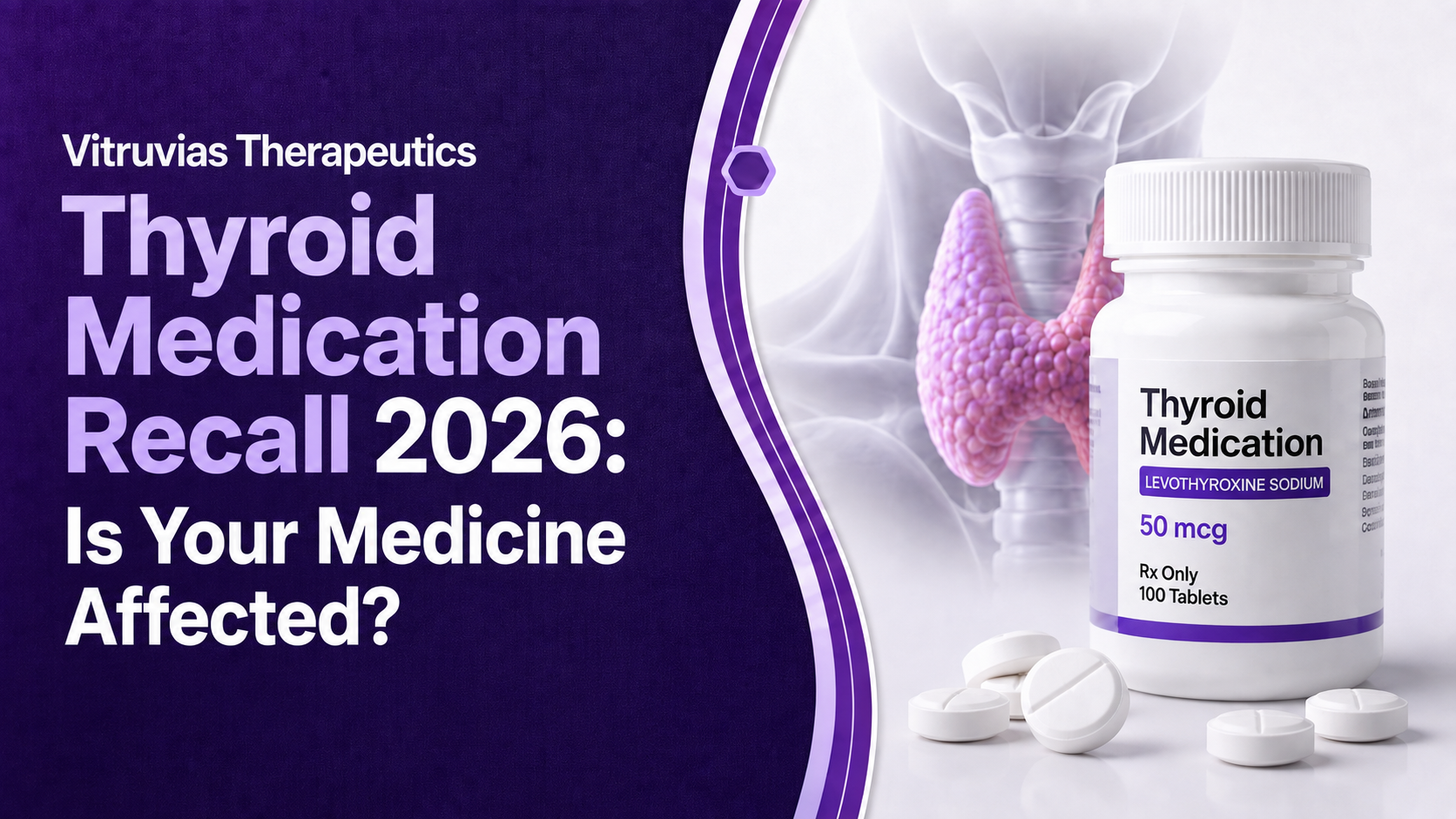
A new thyroid medication recall may leave some patients wondering whether their prescription is affected. Vitruvias Therapeutics, Inc. has voluntarily recalled one lot of Thyroid Tablets, USP, 30 mg, after testing found that the product could be more potent than intended. The company announced the recall on August 21, 2026, and the FDA published it on August 24, 2026.
The recall applies only to a specific lot, not to every thyroid medicine or every Vitruvias product. If you take thyroid replacement medication, checking your bottle and speaking with a healthcare professional can help you respond safely.
Which Thyroid Medication Is Included in the Recall?
The recall involves Thyroid Tablets, USP 30 mg, manufactured by Vitruvius Therapeutics. The affected product carries NDC 69680-166-00, Lot 504950, and expires September 30, 2026.
Vitruvias reported 3,655 units released and 1,955 sold. The affected lot was distributed nationwide in the United States.
Why Were the Thyroid Tablets Recalled?
Vitruvias initiated the recall because testing confirmed the tablets could be superpotent. In simple terms, a tablet could deliver more thyroid hormone than the labeled strength intends.
Thyroid USP is a natural thyroid preparation derived from porcine thyroid glands. It contains levothyroxine, or T4, and liothyronine, or T3. These hormones replace thyroid hormone in people with hypothyroidism.
Because thyroid medication dosing needs to remain consistent, an unexpectedly stronger dose may increase thyroid hormone exposure and cause symptoms linked with too much thyroid hormone.
What Symptoms Can Excess Thyroid Hormone Cause?
Too much thyroid hormone can make the body behave as though the thyroid is overactive. The FDA recall notice lists possible effects such as rapid heart rate, heart rhythm changes, chest pain, high blood pressure, nervousness, heat intolerance, unexplained weight loss, fatigue, and muscle weakness.
Not everyone who has taken tablets from the recalled lot will develop symptoms, and these symptoms can also occur for other reasons. If you notice new palpitations, unusual weight changes, increased heat sensitivity, chest discomfort, or another significant change, contact a healthcare professional.
Who May Need Extra Attention?
The recall announcement highlights greater concern for some groups when excess thyroid hormone exposure continues over time.
Older Adults
Excess thyroid hormone can create additional cardiovascular concerns. Older adults who develop a rapid heartbeat, irregular rhythm, or chest symptoms should discuss them promptly with a clinician.
Pregnancy
Careful thyroid hormone management matters during pregnancy. The recall notice states that overtreatment of hypothyroidism during pregnancy may be associated with premature delivery and low birth weight.
Infants
Accurate dosing is especially important during infancy because excessive thyroid treatment may negatively affect growth and development.
Patients in these groups should not change their dose independently. A healthcare professional can review their needs.
How Can You Check Whether Your Bottle Is Affected?
Look at your prescription label or original packaging. Check the medication name and strength, then find the NDC, lot number, and expiration date.
The recalled product should match:
Thyroid Tablets, USP 30 mg — NDC 69680-166-00 — Lot 504950 — Expiration September 30, 2026.
If you cannot find the lot number, contact the pharmacy that filled your prescription. A pharmacist can help confirm the manufacturer and product information.
Should You Stop Taking the Recalled Thyroid Medication?
Do not stop the affected thyroid medication on your own.
The FDA-posted company announcement advises patients taking Thyroid, USP, from Lot 504950 to contact their healthcare provider before discontinuing treatment.
Your healthcare professional can determine the appropriate next step. Depending on your situation, that may include a replacement prescription, medication review, symptom assessment, or thyroid laboratory testing when clinically appropriate.
Making an unplanned medication change can also affect thyroid hormone control. Therefore, getting individualized guidance remains important even when your bottle matches the recalled lot.
How Passion Health Advanced Primary Care Can Help
A thyroid medication recall can quickly become a medication-management concern. At Passion Health Advanced Primary Care, patients can discuss their thyroid prescription, recent symptoms, medication history, and questions with a primary care clinician.
Your provider can review whether your medicine matches the recalled product, assess symptoms that may suggest a thyroid imbalance, and determine whether thyroid testing or follow-up is appropriate. The care team can also help guide next steps when medication or pharmacy follow-up is needed.
Passion Health Advanced Primary Care also provides patient education about hypothyroidism, thyroid symptoms, diagnosis, and treatment, helping patients better understand how thyroid hormone levels affect overall health.
Patients who already take thyroid replacement therapy may also benefit from reviewing their recent TSH results, medication schedule, other medicines, supplements, and changes in symptoms. PHAP also provides guidance for patients who experience high TSH while taking levothyroxine, including common reasons thyroid levels may change during treatment.
When Should You Seek Medical Attention?
Contact your healthcare professional if you develop new or worsening symptoms that may be related to your thyroid medication.
Symptoms such as a racing heartbeat, irregular heartbeat, significant nervousness, unexplained weight loss, unusual heat intolerance, or worsening weakness deserve medical attention, especially when your medication matches the recalled lot.
For severe chest pain, serious breathing difficulty, fainting, or another potentially life-threatening problem, call 911 or go to the nearest emergency department. Passion Health Advanced Primary Care also offers same-day primary care appointment requests for appropriate non-emergency concerns across North Texas.
Have Any Adverse Events Been Reported?
At the time of the recall announcement, Vitruvias Therapeutics reported no adverse events known to be associated with the recalled lot.
However, the absence of reported events does not mean patients should ignore the recall. The potency concern still makes it important to verify the medication and seek professional guidance when the product details match.
Patients and healthcare professionals can also report suspected medication-related reactions or product-quality concerns through the FDA MedWatch Adverse Event Reporting Program.
Is Every Thyroid Medication Recalled?
No.
This recall does not apply to every thyroid medicine. The FDA notice specifically identifies one lot of Vitruvias Therapeutics Thyroid Tablets, USP 30 mg—Lot 504950.
Patients taking levothyroxine or another thyroid medication should not assume that their prescription is included simply because they heard about a “thyroid medication recall.”
Check the manufacturer, product name, strength, NDC, and lot number before taking further action.
Have Questions About Your Thyroid Medication?
A medication recall can create uncertainty, but patients should avoid making treatment changes based only on a headline. Check your medication bottle, note any new symptoms, and speak with a healthcare professional before changing your thyroid treatment.
Get Clear Guidance on Your Thyroid Care
Medication recalls can be confusing, but you do not have to make decisions on your own. Passion Health Advanced Primary Care can review your thyroid medication, symptoms, and follow-up needs and help you understand the next step in your care.
Frequently Asked Questions
1. What thyroid medication was recalled in 2026?
Vitruvias Therapeutics recalled one lot of Thyroid Tablets, USP 30 mg, because testing identified potential superpotency.
2. What lot number should patients check?
Check for Lot 504950, along with NDC 69680-166-00 and the September 30, 2026 expiration date.
3. What does superpotent thyroid medication mean?
Superpotent means the medicine may provide more thyroid hormone than its intended strength.
4. Does the recall include all thyroid medications?
No. The FDA announcement identifies only one specific lot of Vitruvias Therapeutics Thyroid Tablets, USP 30 mg.
5. Should I stop taking Lot 504950 immediately?
Do not stop the medication without first contacting your healthcare provider. Your provider can help determine whether you need a replacement prescription or another treatment step.

About the Author
Dr. Anantha Chentha is a board-certified internal medicine physician with extensive experience in primary care and chronic disease management. He provides comprehensive, patient-centered care with a focus on prevention, accurate diagnosis, and long-term health management.
View Provider Profile →