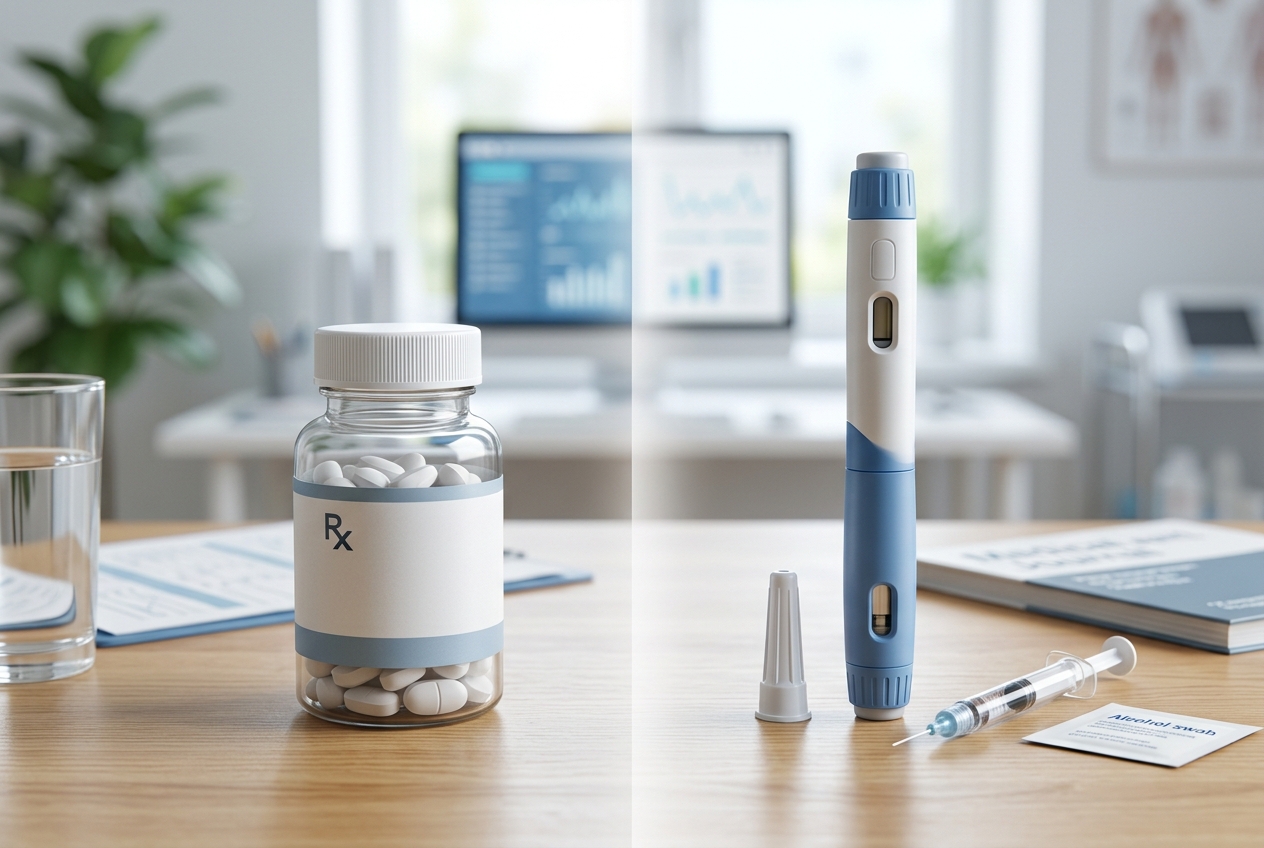
The race to develop a pill that matches the weight loss and blood sugar benefits of injectable medications like semaglutide and tirzepatide has consumed the pharmaceutical world for years. Now, with orforglipron (branded as FOUNDAYO) entering late-stage clinical trials, patients and clinicians finally have a credible oral contender. The question millions are asking: does this daily pill deliver results comparable to the weekly injections that have dominated headlines? For anyone managing type 2 diabetes or obesity, the answer matters enormously, because it could reshape how these conditions are treated for decades. The comparison between orforglipron and injectable GLP-1 medications touches on efficacy, convenience, side effects, cost, and long-term access. Understanding the differences requires looking beyond marketing claims and into the clinical data itself. Here is what we know so far, and what it means for your treatment decisions.
The Evolution of GLP-1 Therapies: Oral vs. Injectable
GLP-1 receptor agonists have been available since 2005, when exenatide (Byetta) became the first FDA-approved drug in the class. Since then, the category has expanded rapidly, with semaglutide (Ozempic, Wegovy) and tirzepatide (Mounjaro, Zepbound) becoming household names. These medications mimic the incretin hormone GLP-1, which signals the pancreas to release insulin after eating, slows gastric emptying, and reduces appetite through brain signaling. The results have been striking: double-digit percentage weight loss and meaningful A1C reductions in clinical trials. But every one of these blockbuster drugs requires an injection, and that single barrier has kept millions of eligible patients from starting treatment.
What is Orforglipron?
Orforglipron is a non-peptide, oral GLP-1 receptor agonist developed by Eli Lilly. Unlike oral semaglutide (Rybelsus), which is a peptide that must be taken on an empty stomach with strict timing requirements, orforglipron is a small molecule. This distinction is critical. Small molecules are easier to manufacture, more stable at room temperature, and can be absorbed without the elaborate formulation tricks that peptide-based pills require. Orforglipron activates the same GLP-1 receptor as injectable drugs but does so through a chemically distinct pathway. Patients take it once daily, and early data suggests it does not require the fasting window that makes Rybelsus inconvenient for many users.
The Mechanism of Injectable GLP-1 Agonists
Injectable GLP-1 agonists like semaglutide and tirzepatide are peptide-based drugs delivered subcutaneously, typically once weekly. Their peptide structure closely mimics the natural GLP-1 hormone, giving them high receptor binding affinity and predictable pharmacokinetics. Weekly dosing is possible because the drugs are engineered with fatty acid chains that bind to albumin in the blood, extending their half-life. Tirzepatide adds a second mechanism by also activating GIP receptors, which amplifies its metabolic effects. The injection route ensures near-complete bioavailability, meaning almost all of the drug reaches the bloodstream. This reliable absorption is one reason injectables have posted such strong clinical results.
Efficacy Comparison in Weight Loss and Glucose Control
The central question for any new GLP-1 therapy is whether it moves the needle on the two outcomes that matter most: body weight and hemoglobin A1C. Both orforglipron and the leading injectables have Phase 3 trial data available, though head-to-head comparisons remain limited.
Clinical Trial Results for Orforglipron
Eli Lilly’s Phase 3 ACHIEVE trial program has produced encouraging numbers. In the ACHIEVE-1 trial for type 2 diabetes, patients on the highest dose of orforglipron (36 mg daily) achieved an average A1C reduction of approximately 1.6% and lost around 9.4% of their body weight over 40 weeks. In the obesity-focused ACHIEVE-4 trial, participants without diabetes lost up to 10.1% of body weight at the same timepoint. These results place orforglipron firmly in the range of effective GLP-1 therapies, though the trials used different patient populations and durations than the landmark semaglutide and tirzepatide studies.
How Orforglipron Stacks Up Against Wegovy and Zepbound
Wegovy (semaglutide 2.4 mg weekly) produced an average weight loss of 14.9% over 68 weeks in the STEP 1 trial. Zepbound (tirzepatide) posted even more impressive numbers: up to 22.5% weight loss at the highest dose over 72 weeks in the SURMOUNT-1 trial. Orforglipron’s 10.1% weight loss over 40 weeks is promising but not yet in the same league, and the shorter trial duration makes direct comparison difficult. Longer-duration orforglipron studies may close the gap, since GLP-1 weight loss typically continues beyond 40 weeks. For A1C reduction, orforglipron performs competitively with injectable semaglutide, though tirzepatide’s dual-agonist mechanism still appears to hold an edge. Patients working with their primary care team at practices like Passion Health Primary Care can discuss which level of efficacy aligns with their personal health targets.
Administration and Patient Convenience
Efficacy data only tells part of the story. Real-world adherence depends heavily on how a medication fits into a patient’s daily life, and this is where the oral versus injectable distinction becomes personal.
The Appeal of a Daily Pill Over Weekly Injections
Needle aversion is not trivial. Studies estimate that 20-30% of patients with diabetes delay or refuse injectable therapies due to fear of needles. A daily oral tablet removes that barrier entirely. Orforglipron does not require the rigid fasting protocol of Rybelsus (which demands a 30-minute empty stomach window with only a small sip of water), making it far more practical for everyday use. For patients juggling morning routines, childcare, or shift work, the simplicity of swallowing a pill with breakfast is a genuine advantage. Daily dosing also allows for more flexible dose titration if side effects emerge, since stopping a daily pill clears the system faster than a weekly injection with a long half-life.
Storage and Portability Advantages
Injectable GLP-1 medications require refrigeration before first use, and some need cold-chain shipping. Traveling with injection pens means packing ice packs, carrying sharps disposal containers, and navigating TSA guidelines. Orforglipron, as a small-molecule pill, is stable at room temperature and fits in a standard pill organizer. For patients who travel frequently, live in areas with unreliable refrigeration, or simply prefer not to manage injection supplies, this difference is meaningful. The storage simplicity also reduces waste and lowers the logistical burden on pharmacies and clinics.
Side Effects and Tolerability Profiles
Every GLP-1 therapy causes gastrointestinal side effects. The question is how severe they are and whether the oral formulation changes the risk profile.
Gastrointestinal Impacts of Oral Peptides
Nausea, vomiting, and diarrhea are the most common side effects across the entire GLP-1 class, regardless of delivery method. In orforglipron trials, approximately 30-40% of patients on the highest dose reported nausea, with most episodes rated as mild to moderate. These rates are broadly comparable to injectable semaglutide and tirzepatide during dose escalation. The key difference is that daily dosing may allow for more gradual titration, potentially reducing the intensity of initial side effects. Most patients in the ACHIEVE trials who experienced GI symptoms found them manageable, and discontinuation rates due to side effects were in the 5-8% range, similar to injectable alternatives.
Long-term Safety Considerations
Because orforglipron is a novel chemical class (non-peptide oral GLP-1 agonist), long-term safety data beyond two years does not yet exist. Injectable semaglutide and tirzepatide have a longer track record, with semaglutide now backed by cardiovascular outcome trial data showing reduced risk of major cardiac events. Orforglipron’s cardiovascular outcomes trial is underway but will not report results for several years. Patients with a history of medullary thyroid carcinoma or multiple endocrine neoplasia type 2 should avoid all GLP-1 agonists, including orforglipron. For anyone weighing the FOUNDAYO pill against injectable GLP-1 options, discussing your complete medical history with a physician who understands these nuances is essential. At Passion Health Primary Care, our same-day appointment availability means you do not have to wait weeks to have that conversation.
Cost, Accessibility, and the Future of Obesity Care
Even the most effective medication fails if patients cannot afford it or find it in stock. The supply crisis that plagued Ozempic and Mounjaro in 2023-2024 proved that manufacturing capacity is just as important as clinical data.
Manufacturing Scalability of Non-Peptide Pills
This is where orforglipron holds a structural advantage. Peptide-based injectables require complex biologic manufacturing processes, sterile fill-finish lines, and cold-chain distribution. Small-molecule pills like orforglipron can be produced using standard pharmaceutical manufacturing equipment at far greater scale and lower per-unit cost. Eli Lilly has signaled that orforglipron’s manufacturing pathway is significantly simpler than tirzepatide’s, which could translate into better supply stability and potentially lower pricing. If these projections hold, orforglipron could become the first GLP-1 therapy that is realistically accessible to the tens of millions of Americans who qualify for treatment but cannot currently get it.
Insurance Coverage and Market Availability
Orforglipron has not yet received FDA approval, so insurance coverage details remain speculative. However, its expected lower manufacturing cost could give payers more incentive to cover it broadly. Currently, many insurance plans exclude injectable GLP-1 medications for obesity, covering them only for type 2 diabetes. A lower-cost oral option might shift that calculus. Patients should verify their specific plan’s formulary and prior authorization requirements, ideally by calling the number on the back of their insurance card rather than relying on online portals alone. Ask specifically whether the drug is covered under a medical benefit or pharmacy benefit, as this affects copay structures significantly.
Determining the Right Choice for Your Health Goals
The comparison between orforglipron and injectable GLP-1 therapies is not a simple winner-take-all contest. If maximum weight loss is the primary goal and cost is not a barrier, tirzepatide (Zepbound) currently offers the strongest data. If needle-free convenience, room-temperature storage, and potentially lower cost matter most, orforglipron represents a genuine step forward for the field.
For patients managing type 2 diabetes, orforglipron’s A1C reduction data is competitive with injectable semaglutide, making it a viable first-line GLP-1 option once approved. Those with established cardiovascular disease may want to wait for orforglipron’s outcomes trial data and stick with semaglutide, which already has proven cardiac benefits.
The right choice depends on your medical history, treatment priorities, insurance coverage, and comfort level with injections. This is exactly the kind of decision that benefits from a thorough conversation with a primary care provider who knows your full health picture. At Passion Health Primary Care, we help patients sort through these options with evidence-based guidance tailored to individual needs. If you are considering a GLP-1 therapy or want to understand how these newer options fit your health plan, schedule an appointment with our team today.