Appendicitis Signs and Symptoms You Should Never Ignore Before It Turns Dangerous
Most people ignore this symptom… until it’s too late
It usually starts as a small, nagging pain.
Nothing alarming. Nothing urgent.
You tell yourself it’s gas. Maybe something you ate.
But within hours, that discomfort turns into something sharper… deeper… harder to ignore.
And by the time many people realize what’s happening, the appendix is already at risk of bursting.
Appendicitis signs and symptoms are often subtle at first, but delaying action can lead to life-threatening complications.
If you’re reading this right now, don’t brush it off. This could be your early warning.
Don’t ignore what your body is trying to tell you.
That small pain could turn into a medical emergency faster than you think.
Book your appointment with Passion Health Primary Care right now.
Same-day evaluations available. Early action can prevent surgery—and save your life.
What is Appendicitis
Appendicitis is a sudden inflammation of the appendix, a small pouch attached to your large intestine.
When it gets blocked, bacteria multiply quickly. Infection builds. Pressure increases.
Without treatment, the appendix can burst.
And when it bursts, infection spreads inside your abdomen—a life-threatening situation.
That’s why recognizing the signs and symptoms of appendicitis early is critical.
Appendicitis Signs and Symptoms Checklist
Recognizing appendicitis signs and symptoms early can save your life. Here’s what to watch for:
Early Symptoms
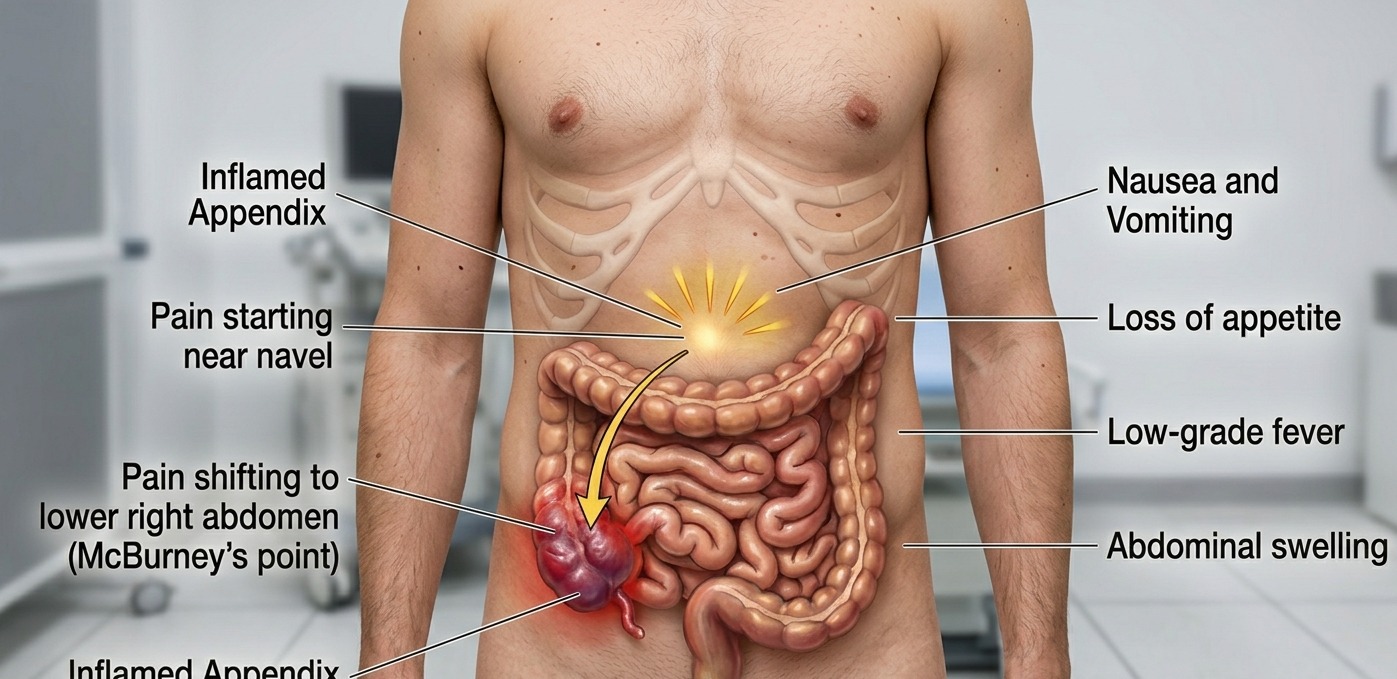
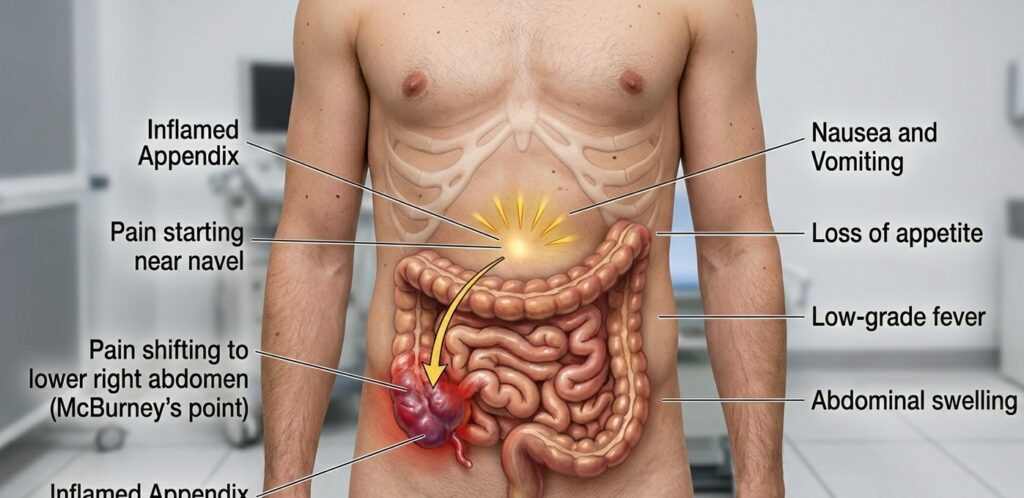
Dull pain near the belly button
Loss of appetite
Mild fever
Nausea or vomiting
Sudden discomfort after eating
Advanced Progressing Symptoms
Sharp pain shifting to the lower right abdomen
Pain that worsens when walking or coughing
Abdominal swelling
Constipation or diarrhea
Difficulty passing gas
Emergency Warning Signs
Severe, unbearable abdominal pain
High fever
Rapid heart rate
Vomiting that doesn’t stop
If you notice 2 or more of these appendicitis signs and symptoms, do not wait.
Not sure if these symptoms apply to you
You don’t have to figure this out alone.
Talk to a doctor at Passion Health Primary Care today.
Get clarity, fast diagnosis, and peace of mind before symptoms worsen.
If You Relate to This, You May Have Appendicitis
Let’s be direct.
If your pain started near your belly button and is now moving downward…
If it hurts more when you move…
If your body feels off, nauseous, and weak…
You may be experiencing appendicitis.
Many patients delay because they hope the pain will go away.
It doesn’t.
Instead, the appendix becomes inflamed, infected, and eventually… it can rupture.
And when that happens, infection spreads rapidly inside your abdomen.
This is not something your body can “heal on its own.”
What Causes This Condition?
Understanding the causes can help you act faster.
Common Appendicitis Causes
Blockage in the appendix from stool or foreign material
Infection in the digestive tract
Swollen lymph tissue
Appendicitis: Reasons You Should Know
Poor gut health
Bacterial overgrowth
Delayed treatment of abdominal infections
Chronic digestive issues
While these appendicitis reasons may vary, the outcome is the same:
Inflammation that worsens quickly and demands urgent care.
Why Appendicitis Signs and Symptoms Are Dangerous
This is where things get serious.
Appendicitis is not a condition you can “wait out.”
What Happens If You Delay
The appendix ruptures
Infection spreads rapidly
Risk of sepsis increases
Emergency surgery becomes more complex
Recovery becomes longer and harder
Many patients wait too long because the pain starts small.
But once symptoms worsen, the situation becomes urgent very quickly.
Ignoring appendicitis signs and symptoms can cost you more than comfort—it can risk your life.
You don’t have to guess what’s happening. You don’t have to wait in fear. Get a fast, expert diagnosis at Passion Health Primary Care today*
Our doctors act quickly so you get answers, relief, and the right treatment—without delay. Book an appointment
Why Early Diagnosis Changes Everything
When caught early, appendicitis is highly treatable.
Benefits of Early Detection
Faster diagnosis
Less invasive treatment
Reduced pain and complications
Shorter hospital stay
Faster recovery
But timing is everything.
The sooner you act on appendicitis signs and symptoms, the safer and smoother your treatment will be.
When to See a Doctor Immediately
This is the most important section.
If you experience any of the following, seek care right away:
Pain moving to the lower right abdomen
Pain worsening over hours
Fever with abdominal pain
Vomiting with persistent discomfort
Don’t wait for the pain to become unbearable.
Early evaluation can prevent surgery and serious complications.
How Passion Health Primary Care Diagnoses Appendicitis
At Passion Health Primary Care, diagnosis is fast and focused.
What to Expect
Detailed symptom review
Physical abdominal exam
Lab tests, if needed
Imaging guidance when required
Our physicians are trained to identify appendicitis signs and symptoms early—before complications begin.
You get answers quickly. And that changes everything.
What This Means for You
If you’re feeling unsure, that’s your signal to act.
You don’t need to be 100 percent certain.
You don’t need to wait for “severe” pain.
You just need to listen to your body.
Thousands of patients delay care, hoping symptoms will disappear.
They don’t.
But here’s the good news:
Appendicitis is treatable
Early care prevents complications
Recovery is faster when diagnosed early
You are not alone. And you don’t have to figure this out by yourself.
Final Thoughts
Your body is giving you signals.
The question is—are you listening?
Appendicitis signs and symptoms are easy to ignore in the beginning. But the consequences of waiting can be severe.
You don’t need to take that risk.
Book your appointment with Passion Health Primary Care now.
Get checked today. Take control before it becomes dangerous.
Frequently Asked Questions
1. How do I know if my pain is appendicitis
If pain starts near your belly button and moves to the lower right side, it could be appendicitis. Always get it checked early.
2. Can appendicitis go away on its own
No. Appendicitis does not go away without treatment and can become life-threatening if ignored.
3. How fast does appendicitis get worse
Symptoms can worsen within 24 to 72 hours. Early action is critical.
4. Is surgery always required
Not always. Early-stage cases may be managed differently, but many require surgery.
5. When should I seek immediate care
If you have worsening abdominal pain, fever, or vomiting, seek medical care immediately.