5 Key Takeaways
- Consider everyday triggers: Caffeine, nicotine, alcohol, stress, and poor sleep may contribute.
- Track your pattern: Record timing, duration, activities, and accompanying symptoms.
- Avoid medication changes: Ask your clinician before changing prescriptions or adding remedies.
- Arrange follow-up: Recurring or worsening episodes deserve medical evaluation.
- Act on warning signs: Call 911 if palpitations do not stop or occur with chest pain, breathlessness, or feeling faint or fainting.
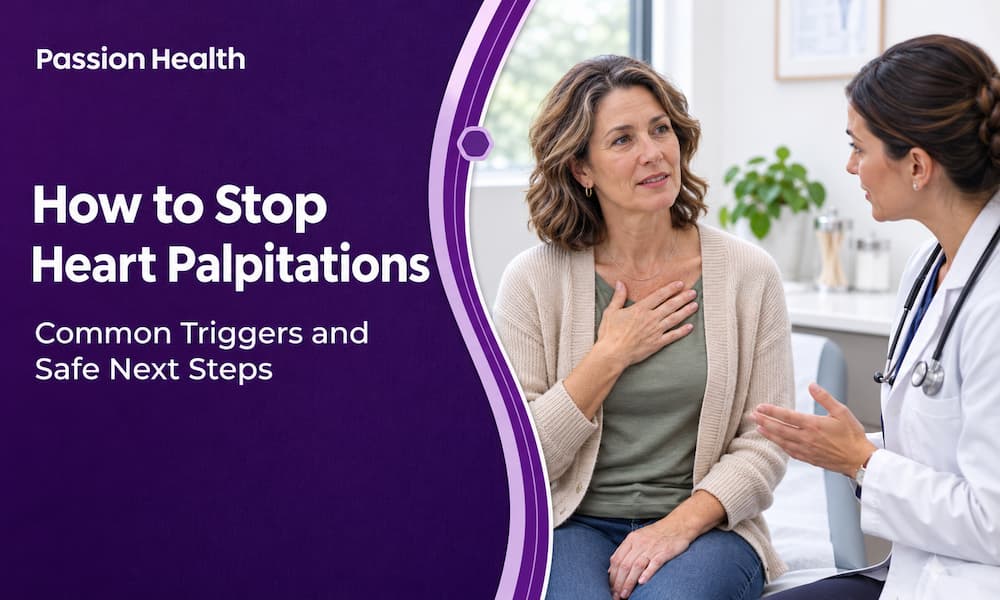
A sudden flutter in your chest can interrupt your work, disturb your sleep, or leave you wondering what happens next. Although many episodes cause no harm, recurring symptoms deserve attention.
Understanding how to stop heart palpitations starts with identifying the cause. Simple changes may help with everyday triggers. However, some heart rhythm problems need medical treatment. A primary care visit can help you understand the difference.
Important warning: Call 911 if your palpitations do not go away, or if you also experience chest pain, shortness of breath, or fainting. Do not drive yourself. If these warning symptoms stop, seek urgent medical advice anyway. NHS
How to Stop Heart Palpitations Safely
For brief episodes without warning symptoms, rest, gentle breathing, and avoiding personal triggers may help. Nevertheless, no home remedy reliably stops every racing heartbeat. Your next step depends on your symptoms and health history.
Pause strenuous activity and rest
First, stop exercising or doing strenuous work when symptoms begin. Sit somewhere safe and notice whether you also feel breathless, dizzy, or uncomfortable.
If exercise repeatedly brings on palpitations, discuss that pattern with your clinician before resuming strenuous workouts. Avoid pushing through unexplained symptoms.
Try gentle breathing and relaxation
Next, breathe slowly and comfortably. Relax your shoulders and allow your breathing to settle without forcing deep breaths.
Relaxation may help when stress contributes to symptoms. However, improvement with breathing does not prove that anxiety caused the episode.
Reduce your personal triggers
Consider whether symptoms follow coffee, energy drinks, alcohol, nicotine, or poor sleep. Then, reduce the trigger and track any changes.
Also, maintain adequate hydration. If your clinician limits your fluids because of a medical condition, follow that guidance. These habits may help, but they cannot replace evaluation for persistent symptoms
Review medicines with your clinician or pharmacist
Some decongestants, inhalers, and other medicines can contribute to palpitations. Therefore, bring a complete list of prescriptions, supplements, and nonprescription products to your appointment.
Keep taking prescribed medicines unless your clinician recommends a change. Likewise, avoid taking extra heart medication to stop an episode without specific instructions.
What Do Heart Palpitations Feel Like?
Heart palpitations describe an unusual awareness of your heartbeat. You might notice:
A rapid or racing heartbeat.
Pounding or thumping.
A fluttering sensation.
A skipped beat followed by a stronger beat.
Extra or irregular beats.
Sometimes, you feel these sensations in your neck or throat. Episodes may last seconds, minutes, or longer. However, the sensation alone cannot tell you whether your heart rhythm needs treatment.
What Causes Heart Palpitations?
Several everyday factors and medical conditions can produce similar symptoms. So, understanding the cause of heart palpitations requires more than matching your experience to an online list.
Swipe sideways to view the full table.
| Possible trigger or cause | Useful detail to share with your clinician |
|---|---|
| Caffeine, alcohol, or nicotine | Amount consumed and timing of symptoms |
| Stress or insufficient sleep | Recent changes in stress and sleeping habits |
| Medicines or supplements | New products, dose changes, or missed doses |
| Dehydration, fever, or illness | Recent illness, sweating, vomiting, or diarrhea |
| Anemia or an overactive thyroid | Other symptoms and previous blood test results |
| An abnormal heart rhythm | Episode frequency, duration, and accompanying symptoms |
Pregnancy and menopause can also contribute. However, avoid assuming that hormones or anxiety explain every episode. Your clinician considers your complete health picture before recommending care. Why Do Heart Palpitations Happen at Night?
You may notice heart palpitations at night because a quiet room removes daytime distractions. Consequently, a heartbeat that escaped your attention earlier may suddenly feel prominent.
Although nighttime symptoms can have everyday triggers, their timing does not establish the cause. For example, note whether episodes follow evening caffeine, alcohol, or a stressful day.
If you want to understand how to stop heart palpitations at bedtime, start by recording these patterns. Then, discuss recurring symptoms with your doctor rather than repeatedly changing sleeping positions or trying unproven remedies.
Concerned about recurring heart fluttering? Request a primary care appointment with Passion Health to discuss your symptoms, possible triggers, and appropriate next steps.
When Should You See a Doctor for Heart Palpitations?
Schedule an evaluation when episodes keep returning, happen more frequently, or last longer than a few minutes. Additionally, tell your clinician about existing heart disease or a family history of heart problems.
Even if you feel well between episodes, a recurring pattern deserves attention. Meanwhile, keep a brief record of:
When symptoms start and stop.
Your activity immediately beforehand.
Any associated discomfort or dizziness.
Recent medicines, drinks, or supplements.
Understanding how to stop heart palpitations safely also means recognizing when self-care no longer provides enough information. Follow the emergency warning above whenever concerning symptoms occur.
How Do Doctors Find the Cause?
Your doctor asks about your symptoms, lifestyle, medical history, and family history. Next, a physical examination and selected tests help guide the evaluation.
An electrocardiogram, or ECG, records your heart’s electrical activity. However, a short office recording may miss an intermittent episode. Therefore, your clinician may recommend a Holter monitor or another wearable recorder.
Depending on your history, blood tests may check for contributing conditions. You do not necessarily need every test; your clinician chooses the next step based on the findings.
How Can a Primary Care Doctor Help With Heart Palpitations?
A primary care doctor for heart palpitations offers a starting point when you have recurring symptoms without emergency warning signs. This visit connects your heartbeat concerns with your overall health.
Start With Your Symptoms and Health History
First, describe the episodes in your own words. Bring your symptom diary and medication list so your doctor can review the timing, possible triggers, and relevant health conditions.
Also, explain how symptoms affect your sleep, work, or activity. These details help guide further questions.
Identify Possible Triggers and Underlying Conditions
Next, your clinician considers potential contributors and decides whether you need testing. Instead of treating every flutter the same way, the evaluation focuses on your individual symptoms and examination.
This approach helps answer how to stop heart palpitations without overlooking another health concern.
Coordinate Treatment, Follow-Up, and Specialist Care
Finally, primary care helps organize follow-up and review results. If findings suggest a heart rhythm problem, your clinician may recommend cardiology care.
Bring questions to each visit and clarify what symptoms should prompt an earlier call.
Does Everyone Need Treatment?
No. Some people need only reassurance and changes to identifiable triggers after an appropriate assessment.
However, others need treatment for an underlying condition or a specific arrhythmia. Options may include medicines or procedures, depending on the diagnosis.
Therefore, avoid borrowing someone else’s medicine or starting supplements as a heartbeat remedy. Learning how to stop heart palpitations requires a plan that fits the cause and your medical history.
Get Help for Recurring Heart Palpitations
You do not need to figure out how to stop heart palpitations alone. A clear symptom history and an appropriate evaluation can help you move toward a practical care plan.
Take the next step: Request a primary care appointment with Passion Health to discuss recurring symptoms and follow-up. For emergency warning signs, call 911 instead of waiting for an appointment.
Need care for this?
A Passion Health clinician can see you in person or online.
In person
See a Passion Health clinician at one of our clinics for a skin exam, with blood work when needed.
Choose your clinic and clinician across North Texas
Book an appointment in person at Passion Health clinicsOnline
A Texas-licensed clinician reviews photos of your red spots or rash through Passion Health Online Care, can arrange blood work when needed, and sends treatment to your pharmacy if appropriate.
Adults 18 and older in Texas · $59, or use insurance
heart disease online in TexasBlood work
Order clinician-reviewed blood work to check what red spots may reflect — including a complete blood count and platelet level when relevant.
Essential Blood Work · 33 markers · from $59
Frequently Asked Questions
How can I stop heart palpitations at home?
Rest may help brief, trigger-related episodes. Additionally, reduce personal triggers and record symptoms. However, seek medical help if palpitations persist or recur.
Can drinking water help heart palpitations?
Water may help when dehydration contributes. Nevertheless, hydration cannot correct every cause of heart fluttering. Follow any fluid restrictions your clinician recommends.
Can anxiety cause a fluttering heartbeat?
Yes, stress and anxiety can contribute. However, do not assume anxiety explains new or worsening symptoms without appropriate assessment.
Why do I notice palpitations when lying down?
Quiet surroundings may make your heartbeat more noticeable. However, lying down does not establish whether an episode needs treatment.
When are heart palpitations an emergency?
Call 911 for palpitations that do not stop or occur with chest pain, shortness of breath, or feeling faint or fainting.

About the Author
Dr. Anantha Chentha is a board-certified internal medicine physician with extensive experience in primary care and chronic disease management. He provides comprehensive, patient-centered care with a focus on prevention, accurate diagnosis, and long-term health management.
View Provider Profile →