Food and Medicine Recalls Can Be Confusing—Here’s How to Verify Them
A recall notice can create immediate concern, especially when the product is something you eat regularly or a medicine you depend on. However, most recalls do not affect every item sold under the same brand. They usually apply to specific products, lot numbers, package sizes, expiration dates, or distribution areas.
Knowing how to check if your food or medicine has been recalled can help you avoid panic and respond safely. Compare the details on your package with information published by the appropriate federal agency.
Concerned about a recalled medicine or possible food-related illness? Schedule a visit with Passion Health Advanced Primary Care for a medication review, symptom evaluation, and clear next steps.
Patients looking for primary care in Frisco, Irving, Plano, Prosper, Anna, Aubrey, Flower Mound, Ennis, Kaufman, Kemp, Mesquite, McKinney, TX
Key Takeaways
- ✓ Most recalls affect specific lot numbers, package sizes, expiration dates or production batches—not every product from the brand.
- ✓ Compare the product name, manufacturer, lot number, NDC or UPC, package size and expiration date with an official recall notice.
- ✓ Do not eat recalled food. Follow the return or disposal instructions and clean any surfaces or containers it may have touched.
- ✓ Do not suddenly stop a recalled prescription medicine. Contact your pharmacist or healthcare provider for safe guidance.
Why Do Food and Medicine Recalls Happen?
A product may be recalled after testing, inspections, complaints, or illness investigations identify a safety or quality concern.
Food recalls may involve bacteria, foreign materials, undeclared allergens, incorrect labels, or packaging defects. Medicine recalls may involve contamination, incorrect potency, labeling errors, defective packaging, or manufacturing problems.
A recall does not mean everyone who used the product will become sick. It means the affected product requires removal, correction, or another safety action.
Start With an Official Recall Notice
Do not rely only on social media, forwarded messages, or brief news headlines. They may leave out the lot numbers or dates that determine whether your product is included.
The FDA publishes recall announcements for medications and many food products. Notices commonly include the reason for the recall, affected product codes, distribution details, and instructions for consumers.
The USDA Food Safety and Inspection Service publishes recalls and public health alerts for meat, poultry, and processed egg products.
How to Check If Your Medicine Has Been Recalled
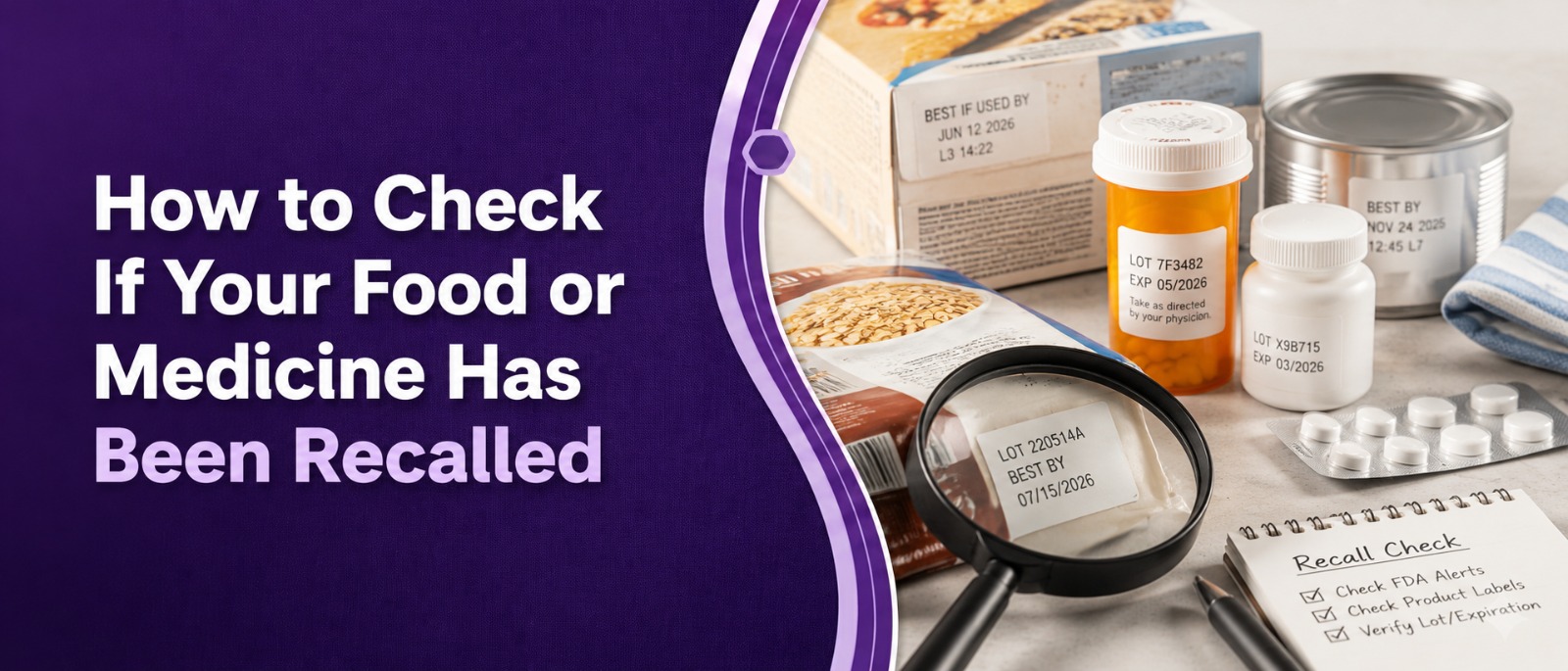
Keep the medicine bottle, carton, blister pack, and pharmacy paperwork while checking the recall.
Look for the following information:
Medication name
Manufacturer or distributor
Dosage strength and form
National Drug Code, or NDC
Lot or batch number
Expiration date
Package size
Compare every available detail with the official recall notice. A matching brand name alone does not confirm that your medicine is affected.
The recall may cover only one dosage strength, manufacturer, package size, or group of lot numbers. Another version of the same medicine may remain unaffected.
A pharmacy-filled prescription bottle may not display the manufacturer’s original lot number. Call the pharmacy that dispensed the medication when you cannot find it.
Pharmacy staff can review inventory records and determine whether your prescription came from an affected supply.
Should You Stop Taking Recalled Medicine?
Do not suddenly stop taking a prescription unless the recall notice or a healthcare professional tells you to do so.
Stopping treatment for thyroid disease, high blood pressure, diabetes, seizures, heart conditions, or other chronic problems may create a greater health risk. FDA guidance advises patients to speak with a healthcare provider before stopping prescription medication.
Keep the medicine separate from your other prescriptions. Contact the pharmacy for replacement, return, or disposal instructions.
Contact your doctor if you took medication from the recalled lot, developed new symptoms, or cannot obtain a timely replacement.
Never double your next dose, reduce your dosage, or switch to another product without medical guidance.
How to Check If Your Food Has Been Recalled
Keep the food package until you confirm whether the recall includes your product.
Two packages may look identical even when only one production batch is affected. Carefully review all the identifying information instead of checking only the brand name.
Look for:
Brand and product name
Flavor or variety
Package weight or volume
UPC or barcode
Lot, batch, or production code
Use-by, sell-by, or best-by date
Establishment number on meat or poultry
FDA guidance recommends comparing the brand, package size, dates, and identifying codes with the official recall notice.
The FDA oversees most food products. USDA FSIS generally handles recalls involving meat, poultry, and processed egg products.
Food and Medication Safety Review
Concerned About a Recalled
Food or Medicine?
A primary care doctor can review your symptoms, medications, possible exposure and medical history while helping you understand the safest next step.
Book an Appointment →What Should You Do With Recalled Food?
Do not eat, taste, cook, serve, donate, or give recalled food to a pet.
Cooking does not always make recalled food safe. It may not remove allergens, chemicals, toxins, foreign materials, or every type of contamination.
Follow the instructions included in the recall notice. You may need to return the product to the store or place it in a sealed container before throwing it away.
Photograph the package label, lot number, expiration date, and receipt before disposal. This information may help with a refund, illness report, or medical visit.
Clean refrigerator shelves, kitchen counters, utensils, and containers that touched the recalled food. Wash your hands thoroughly after handling the package.
What Do Recall Classes Mean?
The FDA may assign a recall to Class I, Class II, or Class III based on the potential health risk.
A Class I recall involves a reasonable probability of serious health consequences or death.
A Class II recall may cause temporary or medically reversible health effects. The likelihood of serious harm is considered remote.
A Class III recall is unlikely to cause adverse health consequences. It may involve less serious labeling, packaging, or manufacturing concerns.
The classification provides useful context. However, the instructions for the specific product remain the most important guidance to follow.
When Should You Contact a Doctor?
Contact a healthcare professional after exposure if you develop persistent vomiting, severe diarrhea, fever, dehydration, unusual weakness, a worsening rash, facial swelling, or concerning medication-related symptoms.
Call 911 for trouble breathing, loss of consciousness, severe confusion, chest pain, or another life-threatening reaction.
Pregnant adults, older adults, young children, immunocompromised patients, and people with chronic health conditions may need earlier medical guidance after exposure.
A recalled medicine may also require symptom monitoring, laboratory testing, or a carefully planned replacement.
Bring the medicine bottle, food package, recall notice, and a list of symptoms to your appointment whenever possible.
How to Stay Updated About New Recalls
Check official FDA and USDA recall pages instead of waiting for information to appear in general news coverage.
You can also register for government recall alerts, read messages from your pharmacy, and keep medications in their labeled containers.
Save food packaging until the product has been used. Review your refrigerator, freezer, and pantry after a major recall announcement.
Recall notices can expand. Recheck the official announcement when more lot numbers, expiration dates, distribution areas, or product names are added.
Final Takeaway
Learning how to check if your food or medicine has been recalled begins with accurate product identification.
Compare the product name, manufacturer, dosage strength, lot number, package code, and expiration date with the official notice. Do not assume every product from the same brand is included.
Never stop an important prescription without medical guidance. Likewise, do not consume food that matches the details in a recall announcement.
Careful verification can reduce health risks while preventing unnecessary fear about products that remain safe to use.
Concerned about symptoms after eating recalled food or taking a recalled medicine?
Book an appointment at Passion Health Advanced Primary Care. Our primary care team can evaluate your symptoms, review your medications, and help you determine the safest next step.
Our Primary Care Locations
Frequently Asked Questions
1. Where can I check current food and medicine recalls?
Use the FDA recall pages for medications and most foods. Check the USDA FSIS for meat, poultry, and processed egg products.
2. Does a recall affect every product from a brand?
Usually not. Most recalls identify specific products, lot numbers, expiration dates, package sizes, or distribution areas.
3. Where is the lot number on a medicine bottle?
It may appear on the manufacturer’s bottle, carton, or blister pack. Contact the dispensing pharmacy if the number is not shown.
4. Can I keep taking recalled medicine?
Follow the recall instructions and contact your pharmacist or doctor. Do not suddenly stop an important prescription without medical guidance.
5. What should I do after eating recalled food?
Stop eating the product, save its package details, monitor your symptoms, and contact a healthcare professional if illness develops.

About the Author
Dr. Anantha Chentha is a board-certified internal medicine physician with extensive experience in primary care and chronic disease management. He provides comprehensive, patient-centered care with a focus on prevention, accurate diagnosis, and long-term health management.
View Provider Profile →