How Egg Recalls Work
Key takeaways
- Salmonella can cause diarrhea, fever, and stomach cramps, usually starting 12 to 72 hours after exposure.
- Check egg cartons for the recall codes and do not eat, cook, or serve recalled eggs.
- Most mild infections improve with rest and fluids, but dehydration needs prompt medical care.
- Most people recover without antibiotics, which are reserved for selected severe cases.
- Seek emergency care right away for fainting, confusion, trouble breathing, or little or no urination.
On this page
- How Egg Recalls Work
- What Should You Do With Recalled Eggs?
- Salmonella and Backyard Poultry
- Common Salmonella Symptoms
- Why Antibiotic Resistance Matters
- Who Faces a Higher Risk of Severe Illness?
- How Primary Care Evaluates Salmonella Symptoms
- Salmonella Treatment and Recovery
- When Should You Contact a Healthcare Provider?
- When Should You Seek Emergency Care?
- How to Prevent Salmonella From Eggs
- Protect Your Health After Possible Salmonella Exposure
- Frequently Asked Questions
Recalls of shell eggs can occur when Salmonella contamination is possible.
Twenty-six people required hospitalization, and officials reported no deaths.
Check current CDC and FDA recall notices for the latest updates.
How to Identify Recalled Eggs
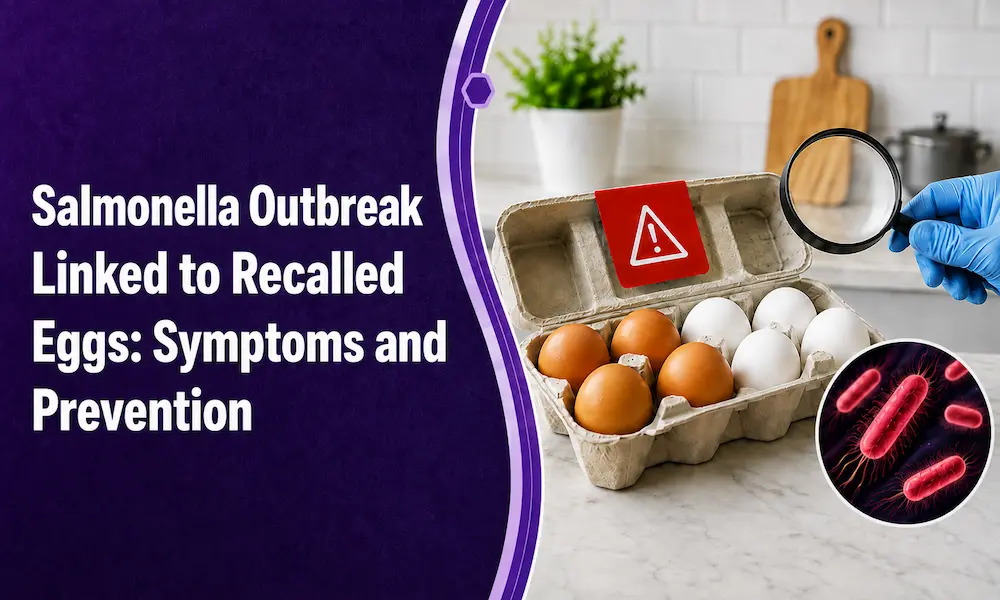
Recalls may include white and brown shell eggs from specific producers. Recalled eggs can appear in many different package sizes.
Official recall notices list the brands involved.
Compare the carton with the codes and dates listed in the official recall notice.
Recalled products can reach food-service and retail customers. Consumers could also purchase them through affected retailers and smaller outlets in Arkansas, Louisiana, Mississippi, New Mexico, Oklahoma, and Texas.
If you removed the eggs from their original carton and cannot confirm whether they are part of the recall, the FDA recommends throwing them away.
What Should You Do With Recalled Eggs?
Do not eat, cook, sell, serve, or donate recalled eggs. Return them to the store for a refund or place them in a secure trash container where people and animals cannot reach them.
After handling the eggs:
Wash your hands with soap and water.
Clean refrigerator shelves and drawers that touched the carton.
Wash bowls, utensils, and storage containers with hot, soapy water or in a dishwasher.
Clean countertops and other food-preparation surfaces.
Keep raw foods away from ready-to-eat foods.
Cooking can reduce Salmonella risk under ordinary circumstances, but consumers should not try to make a recalled product safe. Follow the recall instructions and discard or return the eggs.
Salmonella and Backyard Poultry
Eggs represent one possible source of Salmonella. The bacteria can also spread through contact with chickens, ducks, and their surroundings.
Healthy-looking birds may carry Salmonella. People may become infected after touching birds, coops, cages, feed containers, bedding, or soil and then touching their mouths or food without washing their hands.
To reduce exposure:
Wash your hands after touching poultry or items in their environment.
Keep birds and poultry equipment outside the home.
Supervise young children around poultry.
Do not kiss or hold birds close to your face.
Clean poultry supplies outdoors when possible.
Keep poultry away from kitchens and food-preparation areas.
Need care for this?
A Passion Health clinician can see you in person or online.

In person
Request a visit with a Passion Health primary care provider if you have diarrhea with fever, signs of dehydration, or symptoms after eating recalled eggs. You can book in person at any of our locations.
Choose your clinic and clinician across North Texas
Book an appointment in person at Passion Health clinics
Online
Bring the carton details or recall codes if you have them, along with when symptoms started and any other people who were ill. For non-emergency questions, you can get care online through Passion Health Online Care.
Adults 18 and older in Texas · Texas-licensed clinicians
Get the right care in a few steps
Blood work
Stool testing or blood tests may be considered for severe, prolonged, or high-risk cases, based on your provider’s evaluation.
Essential Blood Work · $59
Get Passion Health Blood WorkCommon Salmonella Symptoms
Symptoms commonly begin within 12 to 72 hours after eating contaminated food, although timing may vary depending on the exposure. Illness often lasts four to seven days.
Common symptoms include:
Repeated diarrhea and vomiting can cause dehydration. Watch for dry mouth, dizziness, reduced urination, and unusual tiredness.
Why Antibiotic Resistance Matters
Some Salmonella strains resist certain antibiotics, which is one reason doctors use them selectively.
Most people with Salmonella recover without antibiotics. Doctors usually reserve antibiotics for selected severe infections or patients with a higher risk of complications. Resistance matters because a clinician may need to choose a different antibiotic when treatment becomes necessary.
Do not take leftover antibiotics or medication prescribed to another person. Unnecessary or incorrect antibiotic use can cause side effects and contribute to antimicrobial resistance.
Who Faces a Higher Risk of Severe Illness?
Some people may develop serious symptoms or require hospitalization, including:
Children younger than five
Adults aged 65 and older
People with weakened immune systems
People taking medicines that suppress immune function
Patients with certain chronic health conditions
Pregnant patients and caregivers who have concerns about exposure should contact a healthcare provider for individual guidance.
How Primary Care Evaluates Salmonella Symptoms
A primary care provider can review what you ate, when symptoms started, and whether you handled recalled eggs or backyard poultry.
The evaluation may include:
Checking temperature, blood pressure, and heart rate
Assessing hydration
Reviewing medications and existing health conditions
Examining the abdomen
Considering stool testing for severe, prolonged, or high-risk cases
Ordering blood tests when dehydration or complications appear possible
Determining whether a higher level of care is necessary
Many mild cases improve with rest and fluids. Treatment depends on symptom severity, age, medical history, and test results.