Flu vs COVID vs Cold: Know the Symptoms Early & Get Same-Day Treatment
When you wake up with a sore throat, cough, or fever, the big question is: Is it the flu, COVID-19, or just a common cold?
These illnesses can look similar at first—but knowing the difference early helps you get the right care, recover faster, and protect your family.
This guide breaks it down in simple, practical terms—so you can decide what to do next.
Quick Overview
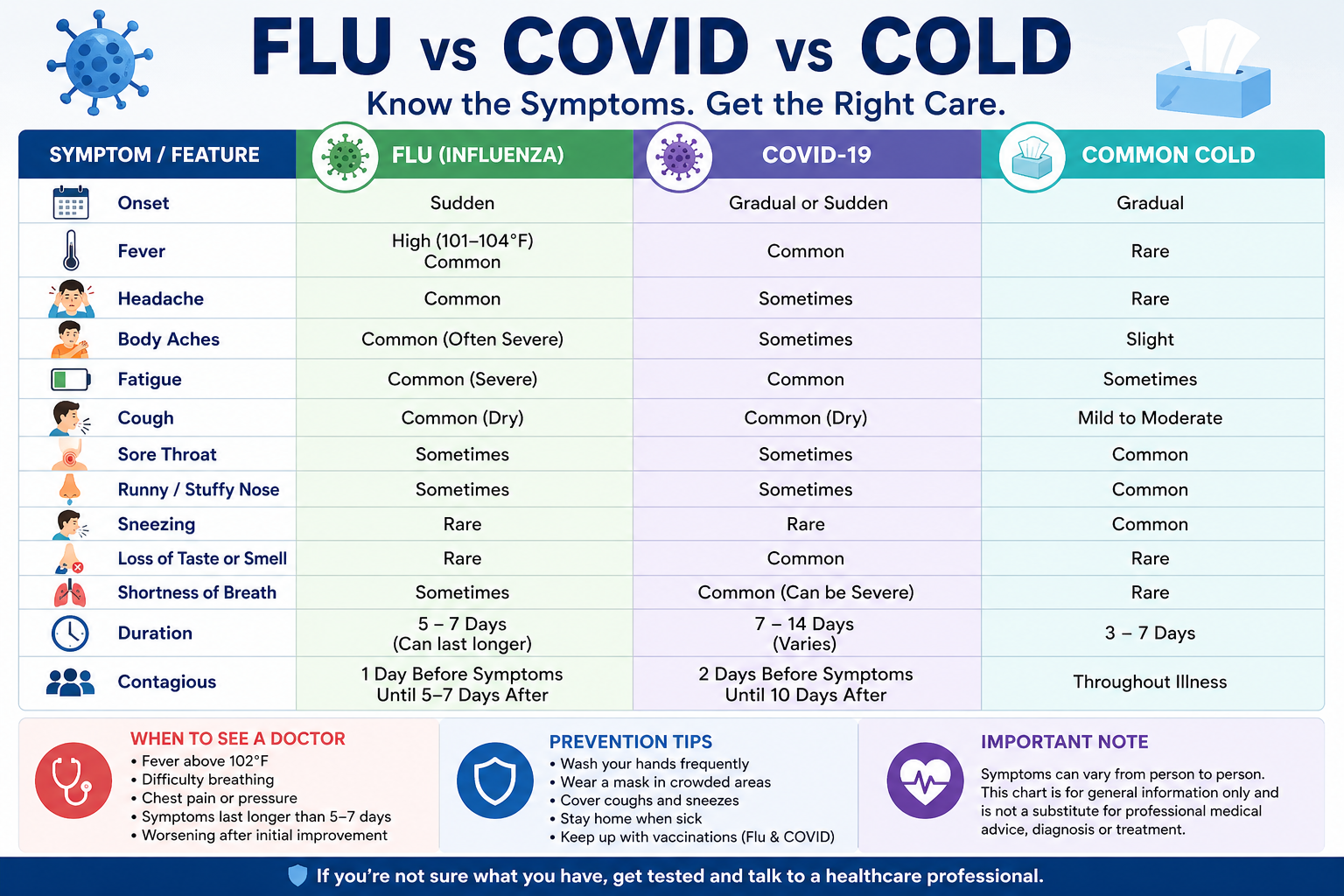
Condition | Onset | Severity | Fever | Common Symptoms |
Flu | Sudden | Moderate–Severe | High | Body aches, fatigue, fever, chills |
COVID-19 | Gradual or sudden | Mild–Severe | Often | Cough, fatigue, loss of taste/smell |
Gradual | Mild | Rare | Runny nose, sneezing, sore throat |
Flu (Influenza): Fast and Intense
How it feels:
Flu symptoms usually hit quickly and hard.
Common signs:
High fever (101–104°F)
Body aches and chills
Severe fatigue
Dry cough
Headache
You may feel too weak to do daily activities.
When to act:
Symptoms appear suddenly
Fever lasts more than 3 days
Breathing feels difficult
COVID-19: Variable but Contagious
How it feels:
COVID can range from very mild to severe, sometimes starting slowly.
Common signs:
Fever or chills
Dry cough
Fatigue
Loss of taste or smell
Shortness of breath
Some people may not have all the symptoms, but still spread the virus.
When to act:
Loss of smell/taste
Persistent cough
Exposure to someone infected
Common Cold: Mild but Annoying
How it feels:
Colds develop gradually and are usually mild.
Common signs:
Runny or stuffy nose
Sneezing
Mild sore throat
Light cough
You can usually continue daily activities.
Key Differences (Easy Way to Tell)
High fever + body aches? → Likely Flu
Loss of smell + fatigue? → Likely COVID
Sneezing + runny nose only? → Likely Cold
When Should You See a Doctor?
Don’t wait—seek care if you have:
Fever above 102°F
Difficulty breathing
Chest pain
Symptoms lasting more than 5–7 days
Worsening after initial improvement
Early treatment can prevent complications—especially for seniors and people with chronic conditions.
Treatment Options
At-home care:
Rest and hydration
Fever reducers (as advised)
Warm fluids
Medical care:
Antiviral medications (for flu)
COVID testing and treatment
Symptom management and monitoring
A primary care doctor can guide the right treatment based on your symptoms.
Same-Day Treatment Matters
Waiting too long can make symptoms worse.
Same-day visits help:
Confirm diagnosis quickly
Start treatment early
Reduce spread to others
If you feel sick, don’t guess—get checked the same day.
How to Protect Yourself
Wash your hands frequently
Avoid close contact with sick people
Wear a mask if needed
Stay home when sick
Keep up with recommended vaccinations
Get Care Near You
If you’re experiencing flu, COVID, or cold symptoms, getting the right care early makes all the difference.
Book a same-day appointment with a primary care provider near you for fast evaluation and treatment.
Frequently Asked Questions
1. Can I have the flu and COVID at the same time?
Yes, though uncommon. Testing helps confirm.
2. How long should I stay home?
Stay home until fever-free for 24 hours without medication.
3. Do I need antibiotics?
No—these illnesses are viral. Antibiotics don’t work unless there’s a bacterial infection.
Final Takeaway
Flu = sudden and severe
COVID = variable and contagious
Cold = mild and gradual
When in doubt, don’t self-diagnose.
Getting checked early can save time, reduce complications, and help you recover faster.