Key Takeaways
- The recall affects Clear Eyes Maximum Itchy Eye Relief 15 mL bottles.
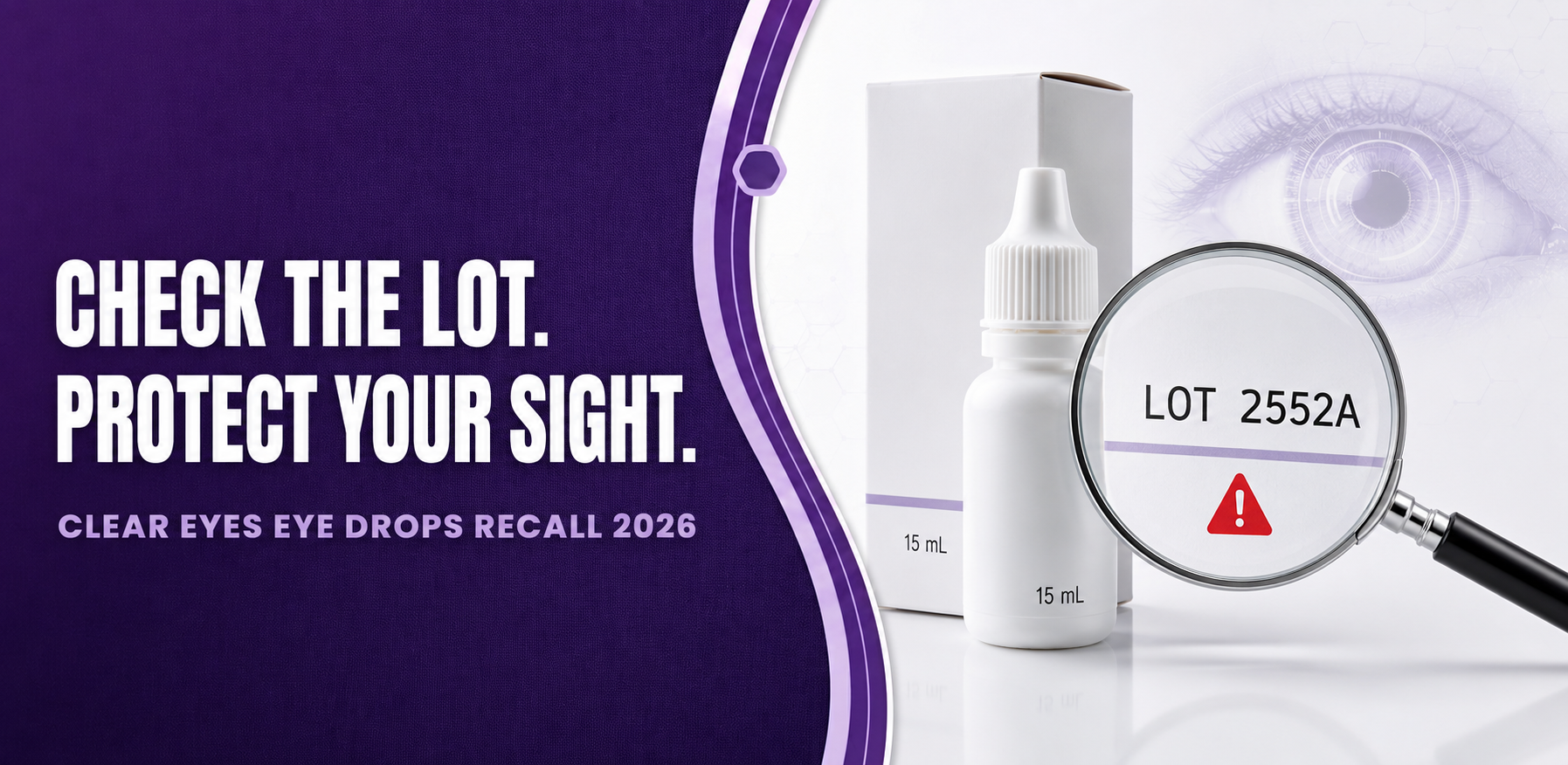
- Check for lot number 2552A and expiration date September 30, 2027.
- The recall applies to one specific lot—not every Clear Eyes product.
- Potential contamination and inadequate sterility assurance prompted the recall.
- Stop using the recalled bottle and follow retailer or manufacturer instructions.
- Seek medical care for eye pain, discharge, swelling or vision changes.
The Clear Eyes Eye Drops Recall 2026 affects nearly 40,000 bottles distributed across the United States. However, the recall does not include every Clear Eyes product. It targets one specific product, bottle size, and lot.
The recalled product may lack adequate sterility assurance, which means potential contamination could pose an eye-safety concern. One small code on the bottle—2552A—can tell you whether the recall applies to your product.
Which Clear Eyes Eye Drops Have Been Recalled?
Prestige Brands Holdings voluntarily initiated the recall on July 29, 2026. The FDA classified it as a Class II recall on August 14, 2026. The recall covers 39,060 bottles distributed nationwide.
Check your product against every detail below:
Product: Clear Eyes Maximum Itchy Eye Relief
Bottle size: 0.5 fluid ounces or 15 mL
Lot number: 2552A
Expiration date: September 30, 2027
Quantity recalled: 39,060 bottles
Distribution: Nationwide across the United States
Recall classification: Class II
Recall reason: Potential contamination and inadequate sterility assurance
The most important point: the recall applies to this specific lot, not the entire Clear Eyes product line.
Consumers should compare the product name, size, lot number, and expiration date before deciding whether their bottle is affected by the recall.
Why Were These Eye Drops Recalled?
The recall notice cites a lack of assurance of sterility due to potential contamination.
Sterility matters for every product that enters the eye. Eye drops make direct contact with the eye’s delicate surface and bypass several natural protective barriers. Therefore, manufacturers must produce, package, and store these products under carefully controlled conditions.
A lack of sterility assurance does not prove that every bottle contains bacteria, fungi, or another contaminant. Instead, it means the manufacturer cannot adequately confirm that the affected lot meets the required sterile conditions.
The available recall information does not identify a specific contaminating organism. Still, consumers should take the recall seriously because contaminated eye products can increase the risk of irritation or infection.
How to Check Your Clear Eyes Bottle
Do not rely only on the brand name or the appearance of the packaging. Recall decisions depend on exact product-identification details.
Follow these steps:
Find the complete product name on the front label.
Confirm that the bottle contains 15 mL or 0.5 fluid ounces.
Locate the lot number on the bottle or outer packaging.
Look for lot 2552A.
Check whether the expiration date reads September 30, 2027.
Your bottle must match the recalled product information. If the lot number has faded or you cannot read it clearly, stop using the drops until a pharmacist, retailer, or manufacturer representative helps you verify it.
Take a clear photograph of the label, lot number, and expiration date. Keeping this information may also help if the retailer provides return or refund instructions.
What Should You Do If You Have the Recalled Lot?
If your bottle matches the recall information, stop using it immediately. Do not continue simply because the liquid looks clear or because you have not experienced symptoms.
Next, place the bottle somewhere separate from your other medications. This step can prevent another household member from using it accidentally.
Contact the retailer or manufacturer for current return, replacement, or disposal instructions. Avoid transferring the liquid to another container, sharing it with anyone, or using it for another purpose.
If you regularly need eye drops for allergies, dryness, glaucoma, or another condition, ask your pharmacist or healthcare provider about an appropriate replacement. Do not substitute another medicated product without checking its ingredients and intended use.
What If You Already Used the Recalled Eye Drops?
Using the affected product does not automatically mean you will develop an infection or eye injury. However, stop using the drops and watch for any new or worsening symptoms.
Watch for:
Increasing eye redness or irritation
Eye pain or tenderness
Swelling around the eye or eyelid
Unusual discharge or excessive tearing
Blurred, cloudy, or reduced vision
Increased sensitivity to light
A sensation that something remains in the eye
Contact a healthcare professional promptly if these symptoms appear after using the recalled product. Tell the clinician the product name, lot number, when you used it, and when your symptoms began.
Do not use leftover antibiotics, another person’s prescription drops, or multiple over-the-counter products in an attempt to treat the problem yourself. Different eye conditions can produce similar symptoms, yet they may require very different treatments.
When Do Eye Symptoms Require Urgent Care?
Some eye symptoms should never wait for a routine appointment.
Seek urgent medical care for sudden vision loss, severe eye pain, rapidly worsening swelling, intense light sensitivity, or a major change in vision. You should also seek immediate care when eye symptoms occur with a serious injury, chemical exposure, fever, severe headache, nausea, or vomiting.
Contact lens wearers should take new eye pain, redness, or discharge seriously because contact lenses can increase the risk of certain corneal infections. Remove the lenses and seek professional guidance rather than inserting another pair.
When symptoms threaten vision, urgent evaluation from an emergency department or eye-care specialist may provide the fastest route to treatment.
What Does a Class II Recall Mean?
The FDA uses recall classifications to communicate the potential level of health risk.
A Class II recall means that using the product may cause temporary or medically reversible health consequences. It can also mean that the chance of serious health consequences remains remote.
This classification should not encourage consumers to ignore the recall. Instead, it helps explain the assessed level of risk while the company removes affected products from circulation.
The safest response remains straightforward: verify the lot number, stop using the recalled bottle, and seek medical guidance if symptoms develop.
Can Primary Care Help With Eye Drop Concerns?
A primary care clinician can review your symptoms, medical history, current medications, and contact lens use. The clinician can also look for signs that suggest irritation, allergy, infection, ophthalmology, or another medical issue.
When necessary, primary care can coordinate care with an optometrist, ophthalmologist, or emergency department. This coordination becomes especially important for patients who have diabetes, autoimmune conditions, a weakened immune system, or a history of eye disease.
However, primary care should not delay emergency treatment when someone experiences sudden vision loss, severe pain, or another vision-threatening symptom.
Eye Drop Safety Beyond the Recall
The Clear Eyes Eye Drops Recall 2026 also provides an important reminder about everyday eye-drop hygiene.
Wash and dry your hands before handling any eye medication. Never allow the dropper tip to touch your fingers, eyelashes, eyelids, or another surface. Replace the cap securely after every use, and never share eye drops with another person.
Follow the label’s contact-lens instructions. The product information for Clear Eyes Maximum Itchy Eye Relief directs users to remove contact lenses before use.
Do not use a solution that looks cloudy, changes color, or contains visible particles. Also, check expiration dates regularly and store eye drops according to the package instructions.
Finally, remember that “redness relief,” “lubricating,” “allergy,” and prescription eye drops serve different purposes. Using the wrong product may mask symptoms without addressing their cause.
Protect Your Eyes by Acting Early
Recall headlines can cause unnecessary fear when they do not explain which bottles the recall covers. In this case, the facts provide a clear action plan.
Check for Clear Eyes Maximum Itchy Eye Relief, 15 mL, lot 2552A, with an expiration date of September 30, 2027. If your bottle matches, stop using it and follow the manufacturer’s or retailer’s return instructions.
If you develop pain, redness, discharge, swelling, or vision changes, do not wait for the symptoms to become severe. Early medical evaluation can identify the cause and help protect your vision.
Concerned after using recalled eye drops? Protect your vision.
Schedule an evaluation at Passion Health Advanced Primary Care to discuss possible causes and receive personalized next steps.
FAQ’s (Frequently Asked Questions)
1. Are all Clear Eyes products included in the 2026 recall?
No. The recall specifically affects Clear Eyes Maximum Itchy Eye Relief in the 15 mL bottle with lot number 2552A and an expiration date of September 30, 2027.
2. Why did the company recall these eye drops?
The company initiated the recall because it could not adequately assure the sterility of the affected lot. This creates a potential contamination concern.
3. What should I do if my bottle matches lot 2552A?
Stop using it, separate it from your other medications, and contact the retailer or manufacturer for return, refund, or disposal instructions.
4. Should I see a doctor if I already used the recalled drops?
Using the drops does not automatically mean you will develop a problem. However, seek medical guidance if you notice pain, persistent redness, swelling, discharge, light sensitivity, or vision changes.
5. What symptoms require immediate medical attention?
Seek urgent care for sudden vision loss, severe eye pain, rapidly worsening swelling, major vision changes, or eye symptoms following an injury or chemical exposure.
6. Can I replace the recalled product with another eye drop?
Ask a pharmacist or healthcare provider which product fits your symptoms and medical history. Avoid replacing it with another medicated drop without professional guidance.

About the Author
Dr. Anantha Chentha is a board-certified internal medicine physician with extensive experience in primary care and chronic disease management. He provides comprehensive, patient-centered care with a focus on prevention, accurate diagnosis, and long-term health management.
View Provider Profile →