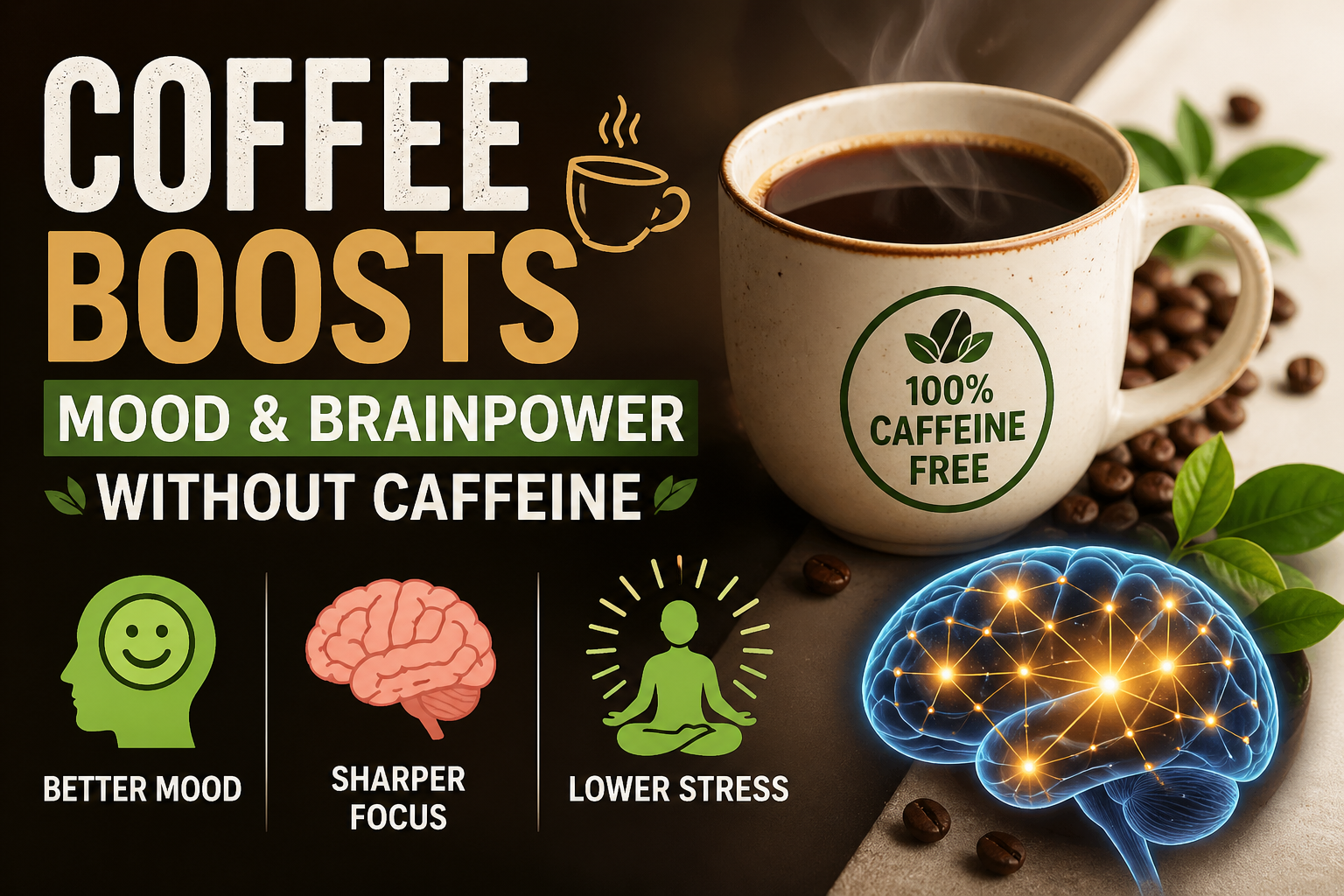
Coffee Boosts Mood & Brainpower Without Caffeine: Why It Works
You drink coffee to wake up. But what if your daily cup does something deeper—steadying your mood, sharpening your thinking, and helping your body handle stress more effectively—even when caffeine isn’t the reason?
As a physician, I see patients every week who struggle with low energy, brain fog, and constant stress. Many of them rely on caffeine for a quick fix.
The new 2026 research changes that conversation. It shows that coffee boosts mood & brainpower without caffeine through powerful biological pathways that most people don’t realize exist.
Let’s break this down in a way that actually helps you use coffee smarter—not just drink it out of habit.
Coffee Boosts Mood & Brainpower Without Caffeine: The Science Most People Miss
Most people think caffeine drives coffee’s benefits. That idea is incomplete.
Coffee contains hundreds of active compounds that influence your body:
Polyphenols that reduce inflammation
Antioxidants that protect brain cells
Natural acids that support metabolism and gut health
These compounds interact with your gut microbiome, which plays a direct role in how your brain functions.
Here’s what happens inside your body:
Coffee feeds beneficial gut bacteria
These bacteria produce neuroactive compounds
Your brain receives signals that regulate mood and stress
This gut-brain communication explains why people feel calmer, clearer, and more emotionally balanced after drinking coffee—even when it’s decaf.
So yes, coffee boosts mood & brainpower without caffeine because the real driver sits in your gut, not just your nervous system.
What the 2026 Study Actually Shows
Recent large-scale studies looked at how coffee affects stress levels, emotional health, and cognition. Researchers tracked hundreds of thousands of people and analyzed biological markers like gut bacteria, inflammation, and neurotransmitters.
Here’s what stood out:
People who drank 2–3 cups of coffee daily reported lower stress levels
Both caffeinated and decaf coffee showed mental health benefits
Coffee drinkers had better cognitive performance and emotional stability
The biggest surprise: benefits remained even without caffeine
The Real Mechanism: Your Gut-Brain Axis
As a physician, I pay close attention to the gut-brain axis. This system connects your digestive tract and brain through nerves, hormones, and immune signals.
Coffee directly influences this system.
When you drink coffee:
It feeds beneficial gut bacteria
These bacteria produce compounds that affect brain chemistry
Your brain receives signals that influence mood and stress response
This explains why coffee can improve how you feel—even when caffeine isn’t involved.
Think of it this way:
A healthier gut creates a calmer, more balanced brain.
Mood, Stress, and Brainpower: What You’ll Notice
From clinical experience, patients who consume moderate coffee often report:
1. Better Mood Stability
You may feel more balanced throughout the day. Fewer emotional dips. Less irritability.
2. Reduced Stress Response
Your body handles daily stress more effectively. Coffee seems to support cortisol regulation when consumed in moderation.
3. Improved Focus and Clarity
Tasks feel easier to manage. Your attention span improves, especially in the morning hours.
4. Mental Energy Without Burnout
Unlike energy drinks, coffee provides a steadier cognitive lift—especially when you avoid excess sugar.
The Decaf Advantage Most People Ignore
Decaf coffee often gets dismissed. That’s a mistake.
Decaf still contains:
Brain-supporting antioxidants
Anti-inflammatory compounds
Gut-friendly plant chemicals
For patients sensitive to caffeine, decaf becomes a powerful alternative. It delivers cognitive and mood benefits without:
Increased anxiety
Heart palpitations
From a medical standpoint, this makes decaf a strategic tool, not a compromise.
The Right Dose Makes the Difference
More coffee does not mean better results. I often see the opposite.
The evidence points to a clear range:
2–3 cups per day → optimal benefits
Excess intake → increased stress and sleep issues
When patients exceed this range, they report:
Restlessness
Poor sleep
Increased anxiety
Balance matters. Coffee should support your system—not overwhelm it.
Timing Changes Everything
How you drink coffee affects how it works in your body.
I recommend:
Drink coffee after your first meal, not immediately after waking
Avoid coffee late in the day, even if it’s decaf for sensitive individuals
Pair coffee with protein or fiber to stabilize blood sugar
These small adjustments improve how your body processes coffee and amplify its benefits.
When Coffee Doesn’t Help
Coffee is not a solution for every problem. I make this clear to patients.
If you experience:
Chronic anxiety
Severe fatigue
Ongoing brain fog
Coffee alone will not fix the issue. These symptoms often point to deeper concerns, such as:
Hormonal imbalance
Poor sleep quality
Nutritional deficiencies
Chronic stress overload
Coffee can support recovery, but it cannot replace proper medical care.
Physician Insight: Why This Matters
Mental health concerns continue to rise globally. Many people look for simple, daily habits that can support emotional well-being.
Coffee now stands out as one of those habits.
But here’s the key distinction:
Coffee supports mood and cognition
It does not replace medical care when needed
If you struggle with chronic stress, anxiety, or depression, you need a comprehensive approach—not just dietary changes.
Common Questions Patients Ask
Is decaf coffee actually useful?
Yes. It contains the same beneficial compounds minus the stimulating effects of caffeine.
Can coffee replace sleep?
No. Coffee may improve alertness, but your brain still requires proper rest for recovery and memory function.
Is coffee addictive?
Caffeine can create mild dependence, but moderate intake remains safe for most healthy adults.
Final Takeaway
Coffee has evolved from a simple beverage to a science-backed tool for brain and mood support. The 2026 research confirms what many people already feel—coffee can help you think more clearly, feel better, and manage stress more effectively.
The biggest shift?
You don’t need caffeine to get those benefits.
Moderation, quality, and timing make all the difference.
Take Control of Your Health
If you feel constant stress, brain fog, or low energy, don’t ignore it. Small symptoms often signal deeper health issues.
At Passion Health Physicians, we take a whole-body approach—combining lifestyle guidance, preventive care, and personalized treatment plans.
Book your appointment today at Passion Health Primary Care and get expert guidance tailored to your health needs.